
When to Trim Trees in Virginia: A Season-by-Season Guide
When to trim trees in Virginia, which species to prune in winter or summer, and the timing that protects oaks from disease and storm damage.
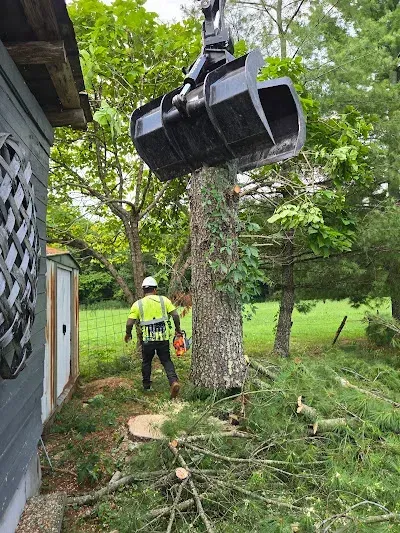
When to trim trees in Virginia: start with the season, not the calendar
Knowing when to trim trees in Virginia comes down to two things: whether the tree is dormant, and whether the wound you open will be sealed before insects and spores find it. Get that right and the same cut does more good.
We trim trees across Harrisonburg and the Shenandoah Valley all year, but not the same species the same way. Here is the timing we actually work by.
Late winter: the best window for most hardwoods
From January into early March, hardwoods are dormant. Without leaves, the branch structure is visible, dead wood stands out, and the tree is not spending energy on the parts you remove. Wounds start sealing as growth resumes in spring.
That window suits oaks, maples, hickories, tulip poplars and most shade trees. It is also easier on lawns, since frozen ground takes equipment better than wet spring soil.
Avoid pruning oaks in the growing season
Oak wilt is the reason. Fresh oak wounds from April through July attract the beetles that carry the fungus, and a single infected tree can spread to neighbors through shared roots. If an oak limb breaks in summer, cut it cleanly to the branch collar and stop there. Defer the shaping work to winter.
Spring: flowering shrubs and dead wood
Spring is the season for cleanup, not heavy pruning. Any dead, broken or crossing branches left by winter storms come out first, because dead wood is where decay and insects start.
Prune spring-flowering shrubs like forsythia and lilac right after they bloom, since they set next year's buds on this year's growth. Trim too late and you cut away the flowers.
Summer: light structural work and hazard removal
Summer pruning is best kept light. A little thinning improves airflow and takes weight off long limbs before storm season, and it is the right time to catch problems that leaves were hiding.
What you should not do in summer is heavy reduction. Cutting back more than about a quarter of a live canopy forces the tree to spend stored energy replacing growth, which sets it up badly for the next drought.
Fall: the season to wait
Autumn is when most homeowners think about trimming, and it is the season we most often talk people out of it. Wounds made in fall stay open longer, and anything that prompts new growth will not harden off before the first hard freeze.
Fall is the right time for a different job: a risk walk. Look at the root plate, the trunk and the limbs over the house. If you see fungus, seams, a fresh lean or hangers, book the work for winter instead of cutting now.
| Season | Good for | Avoid | | --- | --- | --- | | Late winter | Most hardwoods, structural pruning, big removals of limbs | Very cold snaps below about 20°F | | Spring | Dead wood cleanup, shrubs right after bloom | Oaks and other susceptible species | | Summer | Light thinning, hazard limbs, storm damage | Heavy reduction, oak pruning | | Fall | Inspection, planting, planning | Heavy pruning, oaks, flowering shrubs |
What a good pruning cut looks like
Timing is half the job; technique is the other half. A proper cut is made just outside the branch collar, the raised ring where the branch meets the trunk. No flush cuts, no leaving a stub, and no paint on the wound. Trees seal themselves; wound dressing does not help.
If you are hiring, ask what the crew will remove. A good pruning job is not a haircut: we usually take less than a third of the live crown, and we aim for a tree that still looks like itself. The Arbor Day Foundation has a useful primer on structural pruning for younger trees: Arbor Day Foundation.
Storm season in the valley
Most of the damage we clean up happens between June and September, when afternoon storms drop limbs on roofs and driveways. Trees that were thinned correctly in the previous winter come through those storms with less breakage, because wind moves through the canopy instead of loading it.
If a limb is already down and resting on something, do not cut it yourself. A limb under tension can kick when the weight releases. Call 540-915-4149 and we will come take a look.
How we schedule trimming
We book the winter window first because it fills fastest. When you call, tell us the species and what the tree is near, and we will suggest the season that fits. See tree trimming and tree pruning for what each service includes.
Free estimate
Send us the address and a photo of the tree, and we will tell you whether to schedule now or wait for the dormant season. Written price before any work starts.
Request your free estimate or call 540-915-4149.
Frequently asked questions
What is the best month to trim trees in Virginia?+
Late winter, from January into early March, is the safest window for most hardwood trees. The tree is dormant, the structure is easy to see without leaves, and wounds begin sealing as growth starts in spring.
Can I trim oak trees in summer?+
Oaks are best pruned in the dormant season. If a limb breaks in summer, make a clean cut and leave it at that, since open oak wounds in warm weather are how oak wilt spreads. Avoid pruning oaks from April through July unless a limb is a hazard.
Should I cut back crepe myrtles and hydrangeas in fall?+
Wait. Fall pruning can push new growth that winter kills. Prune flowering shrubs right after they bloom, or in late winter while they are still dormant.
Does trimming a tree make it grow faster?+
Pruning does not push height, but it corrects structure, removes dead weight and lets light and air into the canopy. Over-pruning does the opposite and stresses the tree, so we take off less than most homeowners expect.